
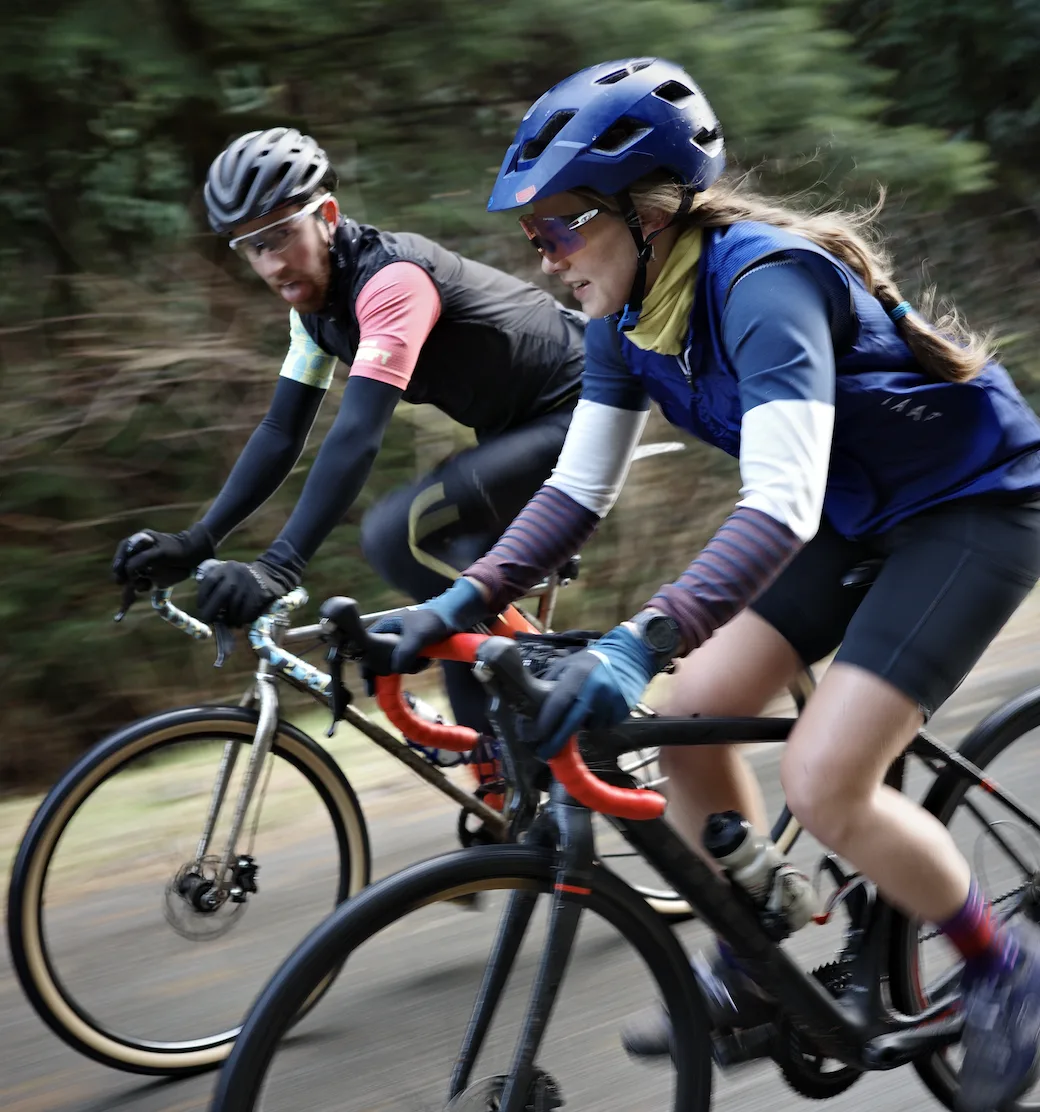
Riding 122 kilometres from Stanley Park to Whistler Village asks something specific of your spine, and it isn't the same thing your legs are being asked. The short version: the RBC GranFondo Whistler puts your lumbar spine under four to five hours of sustained flexion while your neck holds an extended position to keep your eyes on the road. Legs recover in days. That combination of spinal loads, if you never address it, tends to accumulate across an entire season.
I'm Dr. Moses Lee — chiropractor in Downtown Vancouver, competitive cyclist, and someone who has spent plenty of hours on the Sea-to-Sky corridor. With the 2026 GranFondo on September 12, here's what the distance actually does to your spine and how to prepare it.
What 122 Kilometres Does to Your Spine
Your position on the bike is a held posture, sustained far longer than almost anything else you do. Three things happen over the course of a Fondo-length ride.
Your lumbar discs lose height. Intervertebral discs are viscoelastic — under sustained load they slowly express fluid. Hold a flexed lumbar spine for hours and the discs compress, which is a normal, reversible response. The issue is that riders in heavy training blocks never fully return to baseline between long rides.
Your hip flexors adapt to a shortened position. The psoas and rectus femoris spend the entire ride short. They adapt to what you ask of them, and what you're asking is hours of shortening. That's why the tightness so often shows up as lower back pain rather than hip pain — a shortened psoas attaches to your lumbar vertebrae and pulls on them directly.
Your neck holds sustained extension. To keep your head level and your eyes up the road while your torso is pitched forward, your cervical spine has to extend and hold. On the long, steady drags between Squamish and Whistler, that's an unbroken isometric contraction of the deep neck extensors and upper traps.
The Sea-to-Sky Highway makes each of these more pronounced, because the climbing is sustained rather than punchy. There aren't many natural breaks where you sit up, change position, and let things reset.
Why Spinal Decompression Helps You Recover From It
If the problem is sustained compression and flexion, the intervention that makes mechanical sense is controlled traction in the opposite direction.
Spinal decompression applies gentle, rhythmic traction to the lumbar spine — creating space between vertebral segments rather than forcing any joint through its end range. There's no manipulation and no cracking. For cyclists specifically, it targets exactly the tissue your riding position has been loading for months.
What riders usually report isn't dramatic. It's that the low-grade ache which shows up around hour three arrives later, or doesn't arrive at all — and that the day-after stiffness resolves faster.
Roller Massage for the Sea-to-Sky Climbs
Motorized roller massage handles what decompression doesn't: the soft tissue. For GranFondo riders that means hip flexors, glutes, quads, IT band, and the thoracic paraspinals that stiffen from hours in the same position.
Getting the hip flexors to release matters more than most riders expect. When your psoas actually lets go, two things change: your lumbar spine stops being pulled into extension when you stand out of the saddle, and you can rotate your pelvis into a more effective position without your lower back compensating. On a climb like the long grind past Squamish, that's the difference between driving through your glutes and grinding through your lower back. The same logic applies further down — the foot-pedal interface sets the platform everything above it works from.
When to Book: Six Weeks, Three Weeks, Race Week
Timing matters more than volume. A sensible schedule heading into September 12:
- Six weeks out — the foundation session. You're deep in your biggest training weeks. This is where the real work happens: address restrictions properly, and give yourself time to adapt. Deeper soft-tissue work is entirely appropriate this far out.
- Three weeks out — the check-in. Your peak volume has landed and accumulated load is at its highest. This session catches anything that's flared up during the biggest weeks, while there's still time to respond.
- Race week — light only. Gentle decompression and mobility, nothing aggressive, nothing new. The goal is arriving at Stanley Park moving freely, not fixing anything. If you've never had a treatment before, race week is the wrong time to start.
- The week after — the one people skip. After 122 km, your discs are compressed, your hip flexors are shortened, and your neck has held one position for hours. This is the highest-value session of the entire cycle. Book it before race day, because the week after the Fondo fills up fast.
Race Morning at Stanley Park
A few things that help on the day itself. Arrive early enough that you're not rushing — standing in the corral in the cold with a cold spine is a poor way to start. Do ten minutes of easy movement before you roll out: leg swings, gentle thoracic rotations, a few minutes of easy spinning.
And change position deliberately during the ride. Stand up every fifteen or twenty minutes, even briefly, even when the gradient doesn't demand it. Move your hands between the hoods, drops, and tops. Every position change redistributes load and buys your spine a short break. Over five hours, those small resets add up more than any single stretch you do beforehand.
Registered for the 2026 GranFondo?
Book your pre-race session at Shift Clinic in Downtown Vancouver — no referral needed. Unit 504 – 1160 Burrard St.
Book Your Pre-Race Session →