
If you're racing the T100 Triathlon Vancouver on August 15–16, here's the short answer: triathlon doesn't load your spine in one direction — it loads it in three, and they don't cancel each other out. The cervical rotation of the swim, the sustained lumbar flexion of the bike, and the repetitive compressive impact of the run stack on top of one another across a training block. Most of the stiffness triathletes carry into race week isn't one injury. It's accumulation.
I'm Dr. Moses Lee, and I treat a lot of multisport athletes in Downtown Vancouver. Here's what each discipline is actually doing to your spine, and what's worth doing about it in the days before you line up at English Bay.
Three Sports, Three Different Demands on Your Spine
It helps to stop thinking about "training load" as a single number and start thinking about direction.
The swim loads your neck in rotation. Every breath is a cervical rotation under load, and most age-group swimmers breathe overwhelmingly to one side. Over a season, that builds a genuine left-right asymmetry through the neck and upper thoracic spine. Add the extended-neck position of sighting in open water — which you'll be doing repeatedly in the chop at English Bay — and the upper cervical segments take a real beating.
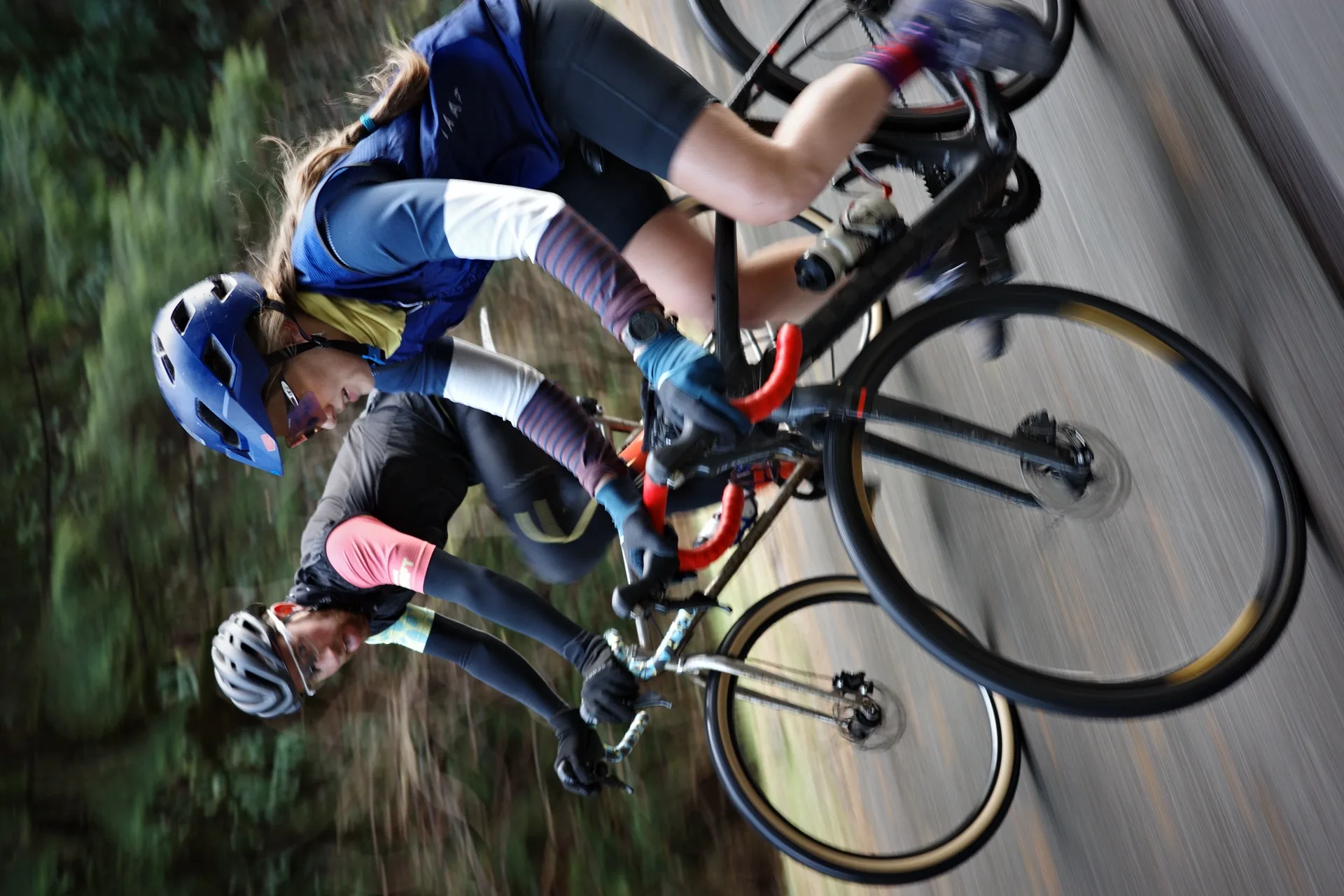
The bike loads your lumbar spine in sustained flexion. Holding an aggressive position on the Stanley Park loop keeps your lumbar spine flexed and your hip flexors shortened for hours at a stretch. Discs are viscoelastic: hold them under sustained flexion and they lose height and hydration over the course of a long ride. Meanwhile the deep hip flexors adapt to the shortened position they live in.
The run loads your spine in compression. Running is a series of controlled impacts, each one transmitted up through the kinetic chain into the lumbar spine. On the Seawall's hard, flat surface, that impact is remarkably consistent and remarkably repetitive — there's little terrain variation to redistribute the load. For athletes who have had recurring trouble off the bike, custom orthotics fitted for the run leg are worth assessing well before race week.
Why the Combination Is the Real Problem
Here's what makes triathlon different from single-sport training. A runner who develops lumbar compression gets relief on their rest days. A triathlete's "rest" from running is a bike session — which loads the same lumbar spine in flexion. The recovery day from cycling is a swim, which asks an already-tight thoracic spine to rotate and extend.
There's no true offload. The tissue never gets a genuinely quiet day, and by the back half of a build, a lot of athletes arrive at a plateau they read as fitness stagnation when it's really a mobility restriction. You're not getting slower. You're getting stiffer, and stiffness costs you efficiency in all three disciplines at once.
The most common pattern I see in triathletes: a stiff thoracic spine that can't rotate well for the swim or extend well on the bike, sitting above a lumbar spine that's compressed from running and flexed from cycling, with hip flexors that have forgotten their full length.
What Decompression and Roller Massage Actually Do
At Shift Clinic we don't adjust with the snap, crack, and pop — and for athletes mid-build, that matters. You don't want an aggressive intervention four days before a race.
Spinal decompression applies gentle, controlled traction to the lumbar spine. Rather than forcing a joint through end range, it creates space — unloading discs that have spent your entire training block under flexion and compression. For triathletes, it directly addresses the bike-and-run half of the equation.
Motorized roller massage works the soft tissue side: the thoracic spine and paraspinals that limit your swim rotation, plus the hip flexors, glutes, and IT band that the bike and run have loaded. It's methodical and it's not aggressive, which is exactly what you want this close to a race.
Neither of these adds fitness. Your fitness is already banked. What they do is let you access the fitness you've built — a thoracic spine that rotates freely swims more efficiently, and hips that extend fully run more economically off the bike.
Timing a Session Before August 15
The single most common mistake is booking something aggressive too close to race day. General guidance for T100 weekend:
- Seven to ten days out: the ideal window for a fuller session. Enough time to work meaningfully and for any transient soreness to fully settle.
- Three to five days out: still very productive. Keep it lighter — mobility and gentle decompression rather than deep soft-tissue work.
- Race week, inside 48 hours: nothing new. If you haven't had decompression before, race week isn't the time to find out how your body responds. Stick to what's familiar.
- The days after: genuinely the highest-value session of the whole block, and the one most athletes skip. Book it before race weekend, because the week after fills quickly.
If you're reading this in the few days before the race and you've never been treated here, the honest advice is to book your post-race session rather than squeezing in a first visit. Race week is for familiar routines.
Racing T100 Vancouver in August?
Book a pre-race session at Shift Clinic in Downtown Vancouver — no referral needed. Unit 504 – 1160 Burrard St.
Book Your Session →