
Biomechanical Assessment · Downtown Vancouver
Custom Orthotics in Downtown Vancouver
Prescription insoles built from a 3D scan and a full biomechanical gait analysis — for flat feet, plantar fasciitis, overpronation, and the foot, knee or back pain that keeps coming back. Fitted to the standard an endurance athlete demands, by a chiropractor who races them.
What are custom orthotics?
Custom orthotics are prescription insoles made from a 3D scan of your foot and a biomechanical analysis of how you walk and run. Unlike store-bought insoles, they correct the specific degree of overpronation, supination, or structural imbalance your body is compensating for — reducing load on the plantar fascia, knee, hip, and spine with every stride.
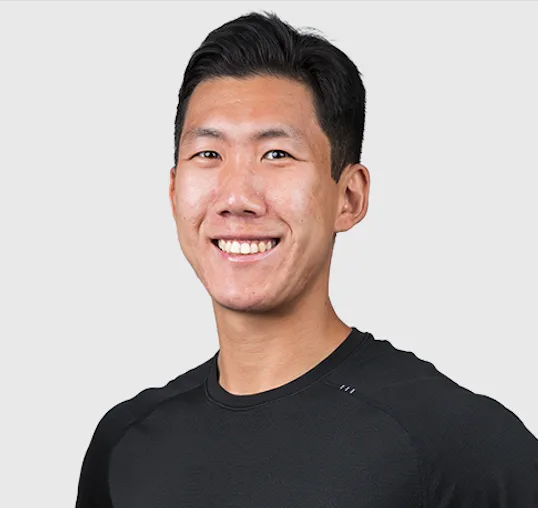
Who Prescribes Them
Fitted to the standard an athlete demands.
Most custom orthotics in Vancouver are prescribed by clinicians who treat feet in isolation, or fitted at a running store by staff selling shoes. Dr. Moses Lee is a practising chiropractor and an endurance athlete — he has run marathons and ultra-marathons and races road bikes, which means he fits orthotics to the most demanding test there is.
That standard is the point, and it is not just for athletes. A device that holds up under 100-kilometre training weeks will hold up under a twelve-hour nursing shift, a day on a job site, or a decade of walking on collapsed arches. The failure mode is the same — a foot that cannot hold its structure under repeated load — and so is the fix.
An orthotic also changes how load travels up your leg into your hips and spine, which is why the assessment here covers the whole kinetic chain rather than stopping at the foot.
- Marathon runner and ultra-marathon competitor
- Competitive road cyclist
- BSc, University of British Columbia · Doctor of Chiropractic (Honours)
- Double board certified — Canada & USA
- Fits for work boots and everyday shoes as readily as race trainers
Who Benefits
Conditions orthotics help correct
Plantar Fasciitis
Morning heel pain or arch pain during the first few kilometres of a run. A custom orthotic offloads the plantar fascia by correcting the mechanical cause rather than just cushioning the symptom.
Runner's Knee (Patellofemoral Pain)
Anterior knee pain worsening on downhills and stairs. Overpronation at the foot causes the tibia to rotate inward, shifting how the kneecap tracks. Correcting foot mechanics eases the pattern upstream.
IT Band Syndrome
Lateral knee pain in runners, often developing midway through a long run. Excessive pronation or a leg-length discrepancy increases tension through the IT band with every footstrike.
Achilles Tendinopathy
A heel lift built into the orthotic reduces load on the Achilles during the push-off phase of running, allowing the tendon to heal while you continue training at modified intensity.
Hip & Lower Back Pain
A leg-length discrepancy of even a few millimetres tilts the pelvis and compresses the lumbar spine asymmetrically on every step. Orthotics with a corrective lift address the biomechanical root cause.
Cycling Foot Pain & Hot Spots
Metatarsal hot spots and forefoot numbness on long rides often come from improper cleat position or a narrow forefoot that isn't supported. A cycling-specific orthotic corrects this at the source.
Flat Feet & Fallen Arches
A collapsed or collapsing arch changes how force travels through the ankle, knee and hip on every step. An orthotic supports the arch at the specific height your foot needs, rather than the generic shape an off-the-shelf insole assumes.
Bunions & Forefoot Pressure
Orthotics do not reverse a bunion, and anyone telling you otherwise is overselling. What they do is redistribute pressure away from the joint and slow the progression by controlling the pronation driving it. If the bunion needs surgical input, Dr. Lee will refer you.
Foot & Leg Pain From Standing All Day
Nurses, hospitality staff, trades and retail workers accumulate the same load a runner does, just spread across a twelve-hour shift instead of an hour. Aching arches by mid-shift and heavy legs by the end are mechanical, not inevitable.
The Process
From assessment to your first run
Biomechanical Assessment
Dr. Lee watches you walk and run, assessing foot strike pattern, pronation angle, hip alignment, and how load is distributed through each stride. A full history of your training volume and injury pattern is taken.
3D Foot Scan
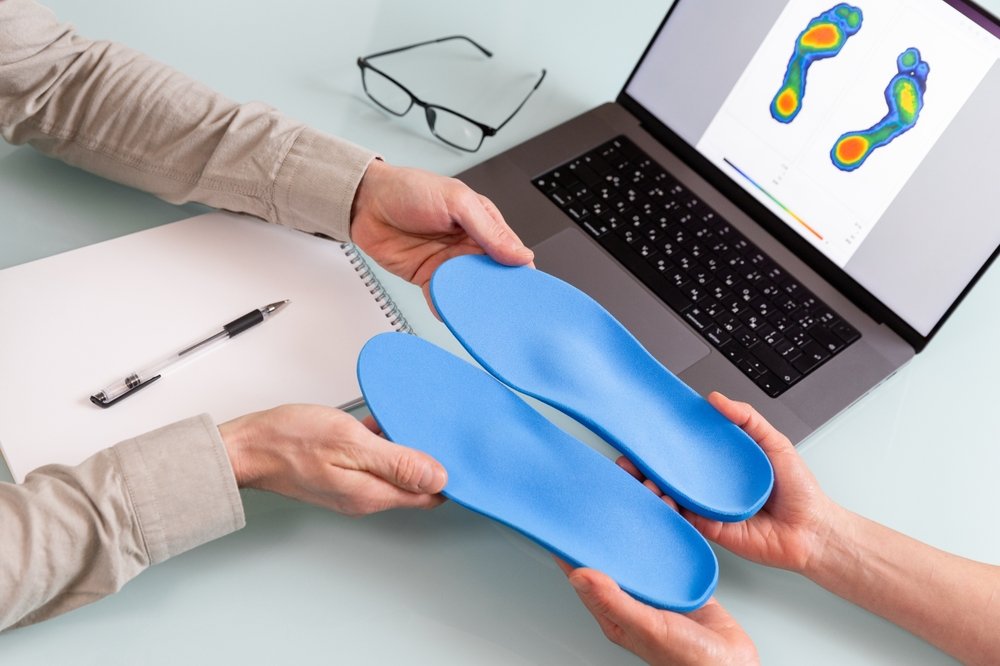
A digital scan captures the exact contour of your foot in a neutral, non-weight-bearing position. This is the mold your orthotic shell is built from, specific to your arch height, heel width, and forefoot shape.
Prescription & Fabrication
Dr. Lee writes a biomechanical prescription specifying the corrections, material, and top cover suited to your activity. Your orthotics are fabricated at a certified lab and ready within 2–3 weeks.
Insurance coverage
Most extended health plans in BC include a custom orthotics benefit, commonly in the range of $200 to $500. Plans do differ in the details: most accept a chiropractor's prescription, though some require a referral from a physician, and renewal windows vary — yearly on some plans, every two or three years on others.
You get Dr. Lee's biomechanical assessment report, gait analysis findings, written prescription and an itemized receipt, all emailed immediately after your appointment. We don't direct-bill. Bring whatever you know about your plan to the assessment — if it has specific documentation requirements, Dr. Lee will write it that way the first time.
Comparison
Custom Orthotics vs. Store-Bought Insoles
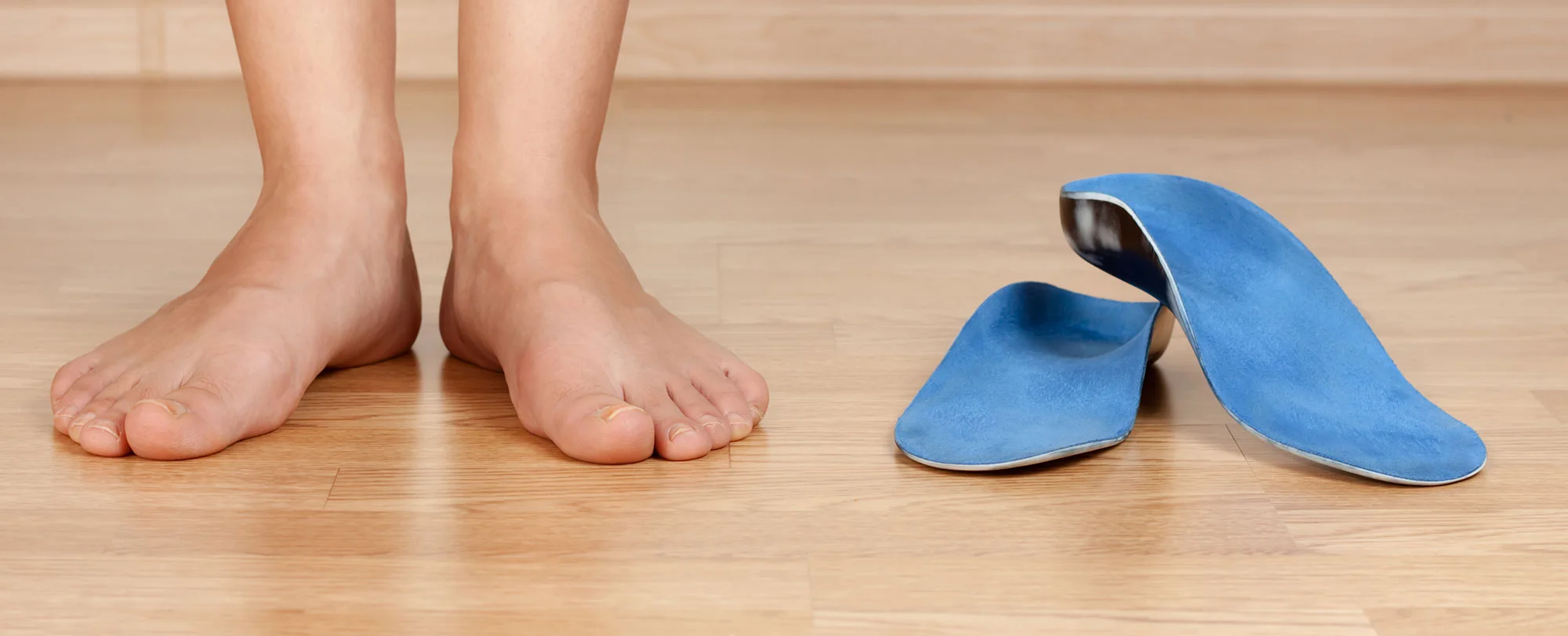
Off-the-shelf insoles add cushioning. Custom orthotics add correction. For recreational runners or cyclists with no structural issues, a quality insole may be enough. For anyone dealing with recurring injury, or training at higher volumes, a prescription orthotic addresses the biomechanical driver rather than just the symptom.
| Feature | Custom Orthotics | Store-Bought Insoles |
|---|---|---|
| Fit | 3D scan of your exact foot shape | Generic average shape |
| Correction | Biomechanically prescribed to your gait | Cushioning only, no correction |
| Insurance eligible | Yes, with prescription and assessment | No |
| Athletic performance | Designed for running and cycling footwear | Often too thick for performance shoes |
| Durability | 3–5 years | 3–6 months of athletic use |
| Addresses injury cause | Yes, targets the biomechanical driver | No, manages symptoms only |
Where To Get Them
Sports chiropractor, podiatrist, or running store?
All three are legitimate, and they are genuinely good at different things. Here is an honest read on which one fits your situation.
Podiatrist / Pedorthist
Foot Specialist
- What gets assessed
- Foot and ankle structure, skin and nail pathology, and gait as it presents at the foot.
- What you leave with
- Custom orthotics and foot-focused treatment.
Best for: diagnosed foot pathology, surgical questions, diabetic foot care.
Running Store Fitting
Footwear First
- What gets assessed
- Foot shape and a short treadmill gait look, usually in order to select a shoe.
- What you leave with
- A shoe recommendation, sometimes an off-the-shelf insole.
Best for: choosing the right trainer. A sensible first step if you have no injury history.
Shift Clinic
Whole Kinetic Chain
- What gets assessed
- Gait and the chain above it — foot strike, pronation angle, hip alignment, spinal loading — plus how many hours a day you spend on your feet and what footwear you actually live in.
- What you leave with
- A prescription orthotic, a break-in schedule built around your real week, and spine care if the chain needs it.
Best for: recurring foot, knee, hip or lower back pain where the cause is biomechanical — whether that comes from running, cycling, or being on your feet all day.
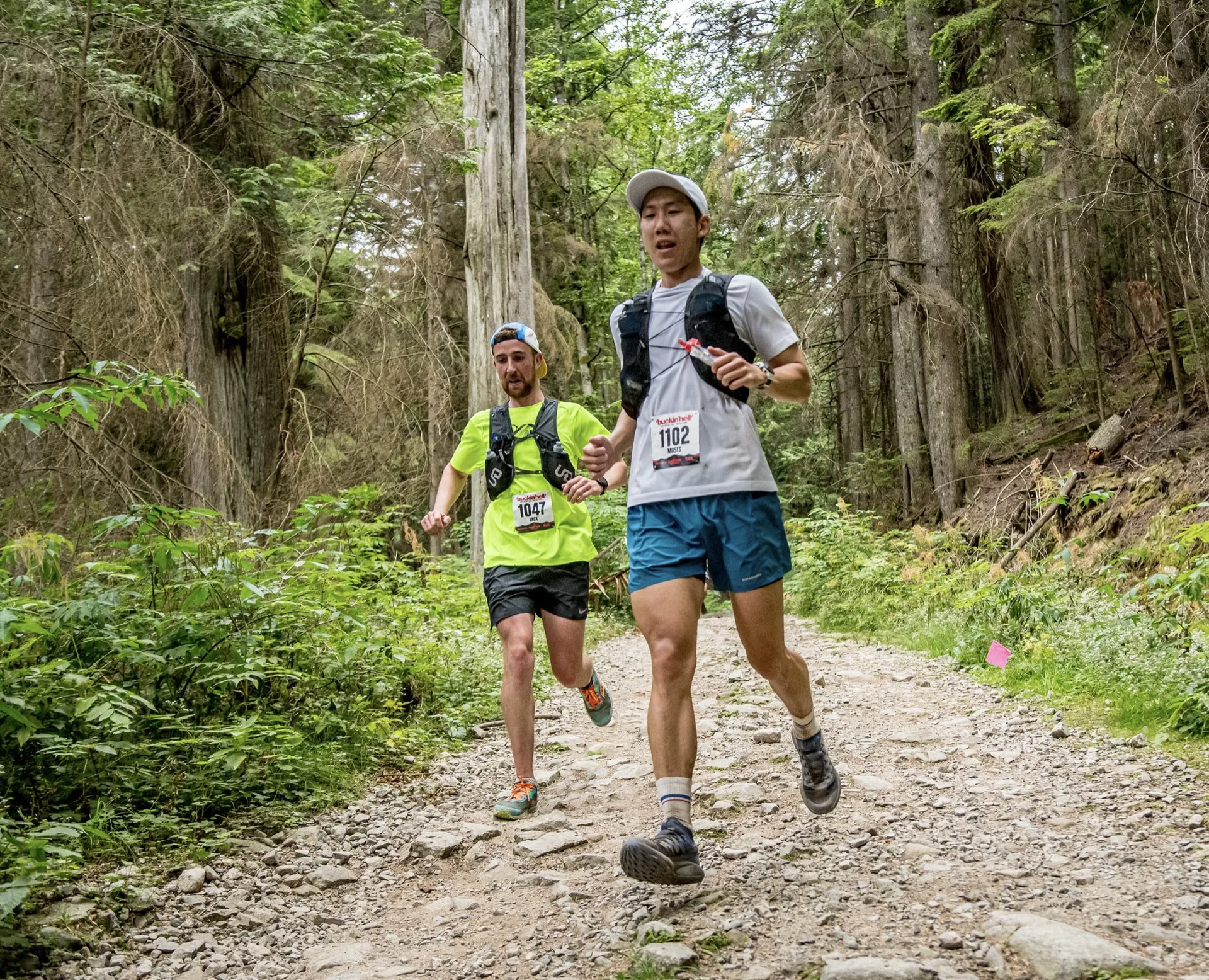
The distinction matters most when the problem is not actually in your foot. Recurring running injuries often trace back to how load travels up the leg, which is why an assessment that stops at the ankle can miss the driver entirely — the same reason hip pain during a marathon build and post-run lower back tightness so often show up in the same runners.
Common Questions
Answers before you book
Store-bought insoles are built to average foot shapes and provide cushioning only. Custom orthotics are prescribed based on a biomechanical gait analysis specific to you — they correct the exact degree of overpronation, supination, or leg-length discrepancy your body is compensating for. For runners and cyclists, that precision translates directly into reduced injury risk and more efficient movement.
Usually. A typical BC extended health plan includes $200–$500 toward custom orthotics, though the details differ from plan to plan — the maximum may apply per pair or per benefit year, and renewal windows range from yearly to every two or three years. Most insurers accept a chiropractor's prescription, but some require a referral from a physician, so it is worth knowing which yours is.
We provide the biomechanical assessment report, gait analysis findings, written prescription and itemized receipt, emailed immediately after your visit. If your plan has particular documentation requirements, mention them at the assessment and Dr. Lee will produce it that way.
The initial assessment and 3D scan takes 30–45 minutes in a single visit. Your orthotics are then fabricated off-site and ready to pick up within 2–3 weeks.
Yes. We fabricate sport-specific orthotics designed for the narrower last of athletic footwear. Many runners and cyclists have separate pairs — one for running shoes and one for cycling shoes — since the biomechanical demands differ between the two. Dr. Lee can advise on the best approach based on your training volume in each sport.
A well-maintained pair typically lasts 3–5 years with moderate athletic use. High-mileage runners may see wear on the shell or top cover sooner. We can replace the cover material without remaking the full orthotic, which is more cost-effective and extends the life of your original shell significantly.
Yes, but not at full volume on day one. Dr. Lee gives every runner a break-in schedule: start with easy days at roughly half your normal distance, then build over two to three weeks before putting them in a long run or a workout. Your foot, calf and hip are adapting to a new input, so mild arch or calf fatigue in the first week is normal. Sharp pain is not — if that happens, stop and get in touch so the prescription can be reviewed.
Sometimes, but it depends on the shoe. Carbon-plated super-shoes already have an engineered geometry and a very low-volume upper, so a full-length orthotic often changes the fit and can work against the plate. Most runners use their orthotics in daily trainers — where the mileage, and the injury risk, actually accumulate — and race in the shoe as designed. Dr. Lee races himself and will tell you honestly which of your shoes are worth fitting and which are not.
Plenty of the time. If you have a neutral gait, no recurring injury pattern and you are training at moderate volume, a well-chosen shoe and a sensible build in mileage will do more for you than an orthotic will. Orthotics earn their place when there is a measurable structural driver — significant overpronation, a leg-length difference, a collapsed arch — or when an injury keeps returning to the same spot despite good load management. If the assessment shows you do not need them, Dr. Lee will tell you so at the first visit. There is more on this in his honest guide to whether you actually need orthotics.
"My plantar fasciitis had been stopping every long run for two years. Dr. Lee watched me run, built the orthotics, and I finished my first marathon pain-free three months later."
- Marathon Runner, Vancouver
Often Paired Together
Orthotics work best alongside spine care
Foot mechanics affect the entire kinetic chain. Many patients combine orthotics with spinal decompression or chiropractic care to address both the ground-level input and the spinal compression it creates upstream.
Spinal Decompression
If overpronation has been loading your lumbar spine unevenly for years, orthotics correct the input while decompression addresses the accumulated disc pressure that's already there.
Learn about decompression →Sciatica Treatment
A pelvis that tilts asymmetrically with every step can aggravate sciatic nerve compression at the L4/L5 level. Orthotics level the foundation; decompression treats the nerve root.
Learn about sciatica care →Learn More
Custom orthotics resources
Researching whether custom orthotics are right for you? Dr. Lee — a practising chiropractor as well as a marathoner and ultramarathon competitor — has written plain-English guides to the questions patients ask most.